Sovereign Tower overview
What kind of game is Sovereign Tower?
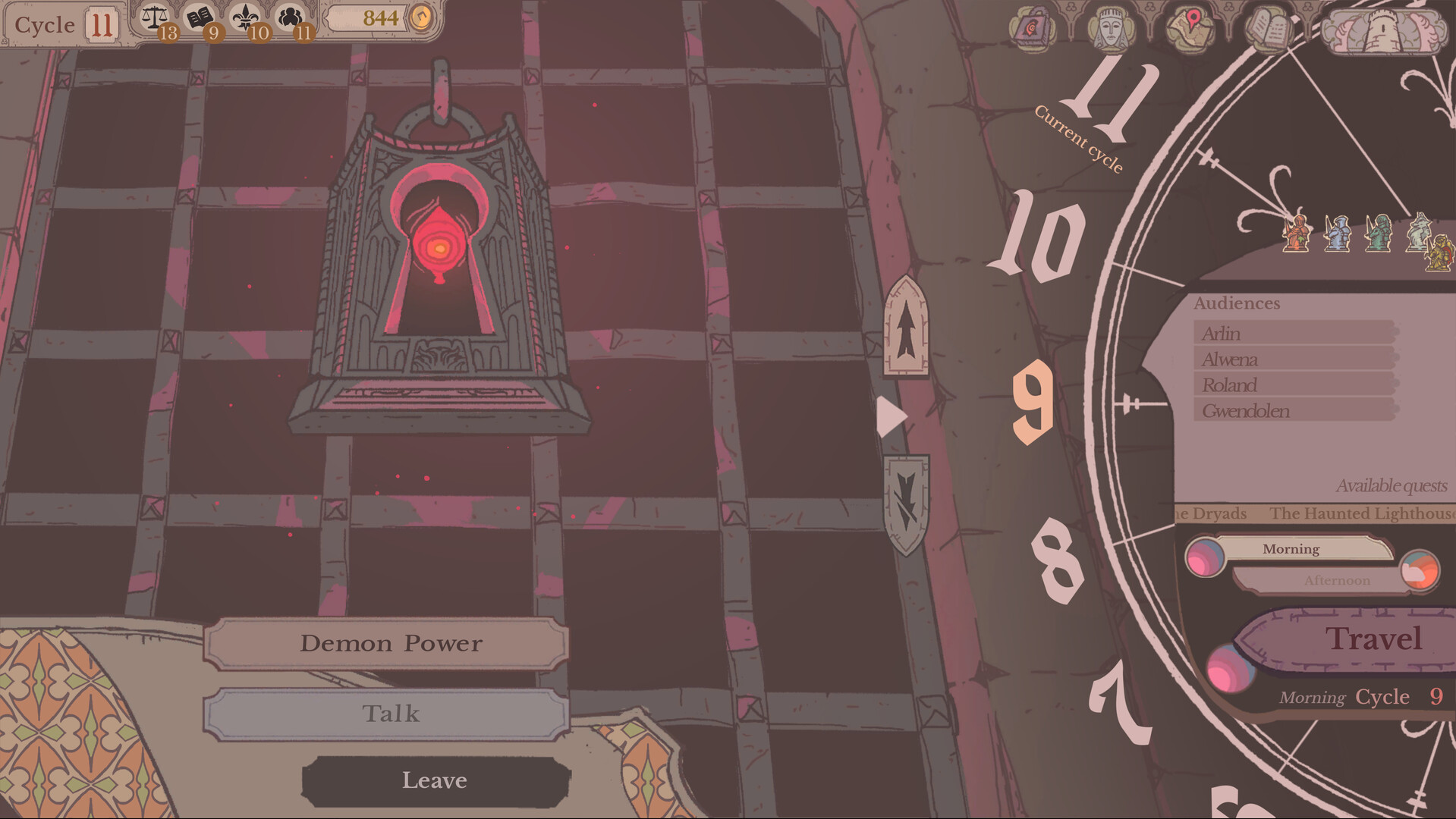
Sovereign Tower is a narrative management RPG built around ruling, delegation and repeated timelines. You do not travel through every adventure as a conventional hero. Instead, people bring problems to your audience, the realm reacts to your decisions, and the Knights of the Round Table carry out the work you approve. The challenge comes from reading situations well enough to choose a promise, preserve the kingdom’s stability and send a character whose abilities and personality fit the assignment.
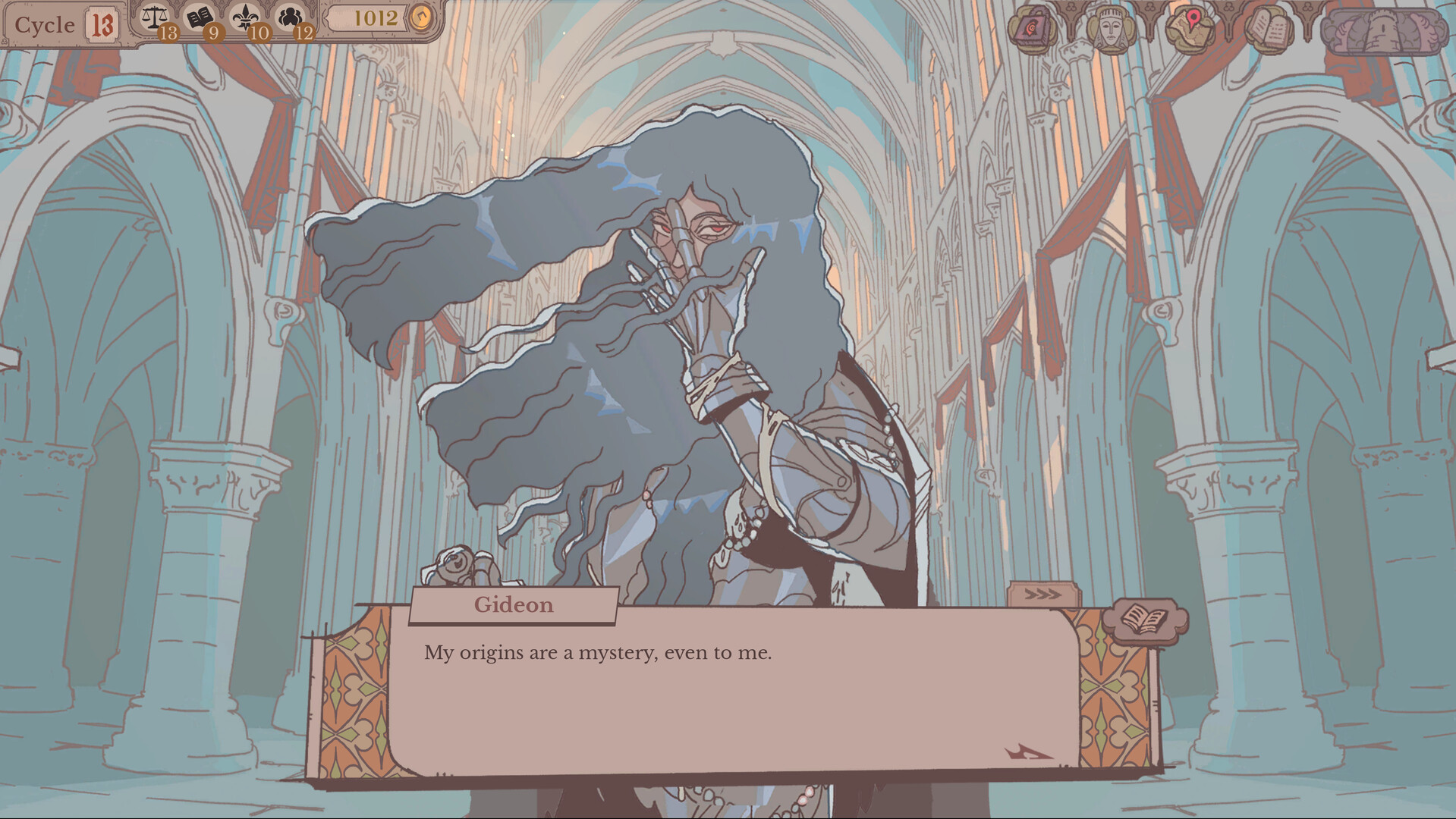
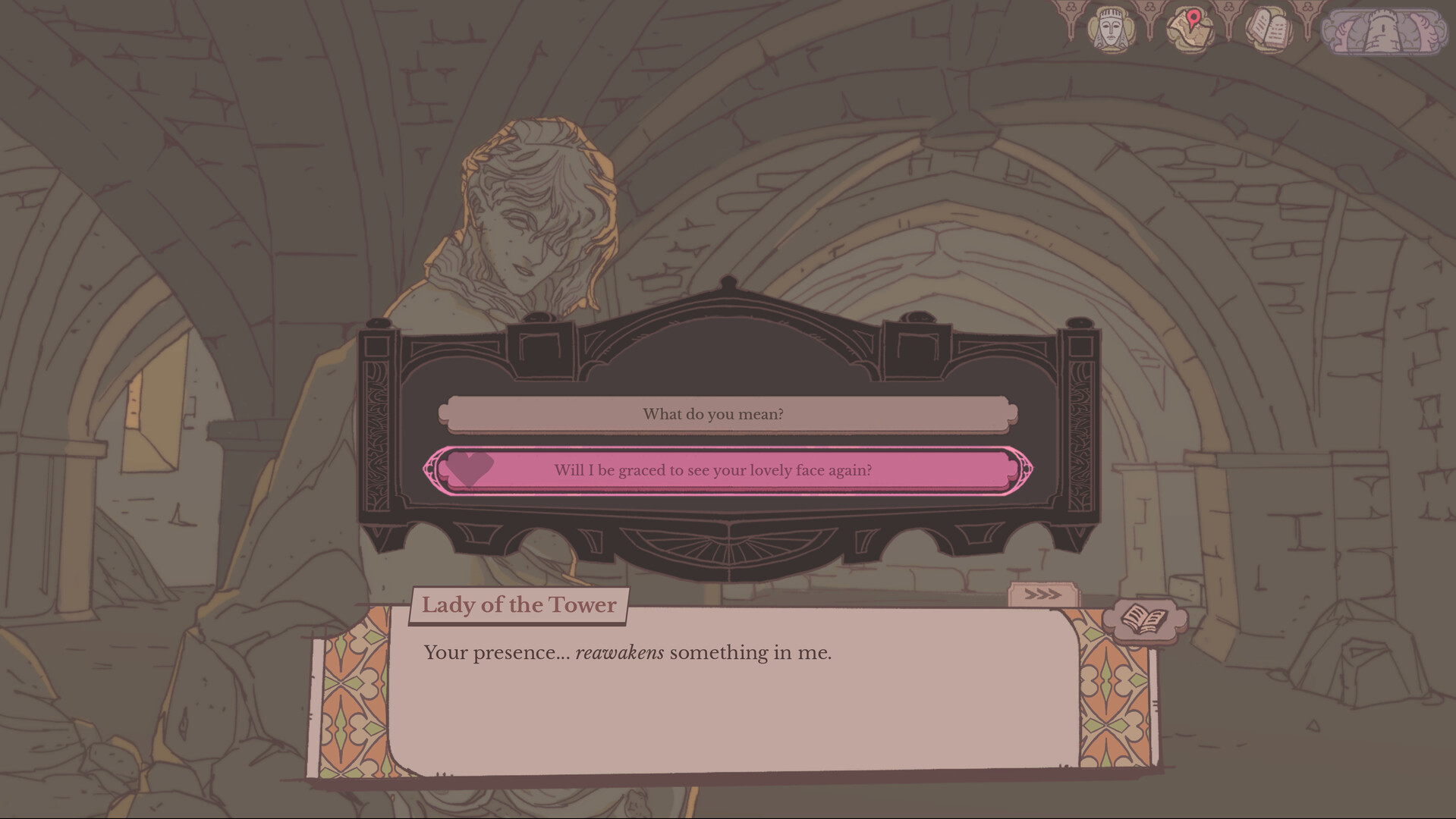
The management layer and the story layer are inseparable. A decision that appears financially sensible can upset a faction. A statistically capable Knight may dislike an assignment or have personal context that changes its outcome. A conversation that seems optional can matter later because relationships, satisfaction and knowledge all influence which opportunities remain available. This is why a useful Sovereign Tower walkthrough cannot be reduced to a single list of “correct” dialogue choices.
How the core systems connect
Audience decisions create obligations
The audience is where new problems enter your reign. Read the complete request before committing. Ask which faction benefits, which resource may be spent and whether accepting the problem creates a quest that will occupy one of your Knights. The immediate response is only the first part of the decision; the later assignment and its outcome are the second part. When several requests arrive close together, keeping one capable Knight available can be more valuable than chasing the fastest possible result.
Knights are characters, not interchangeable units
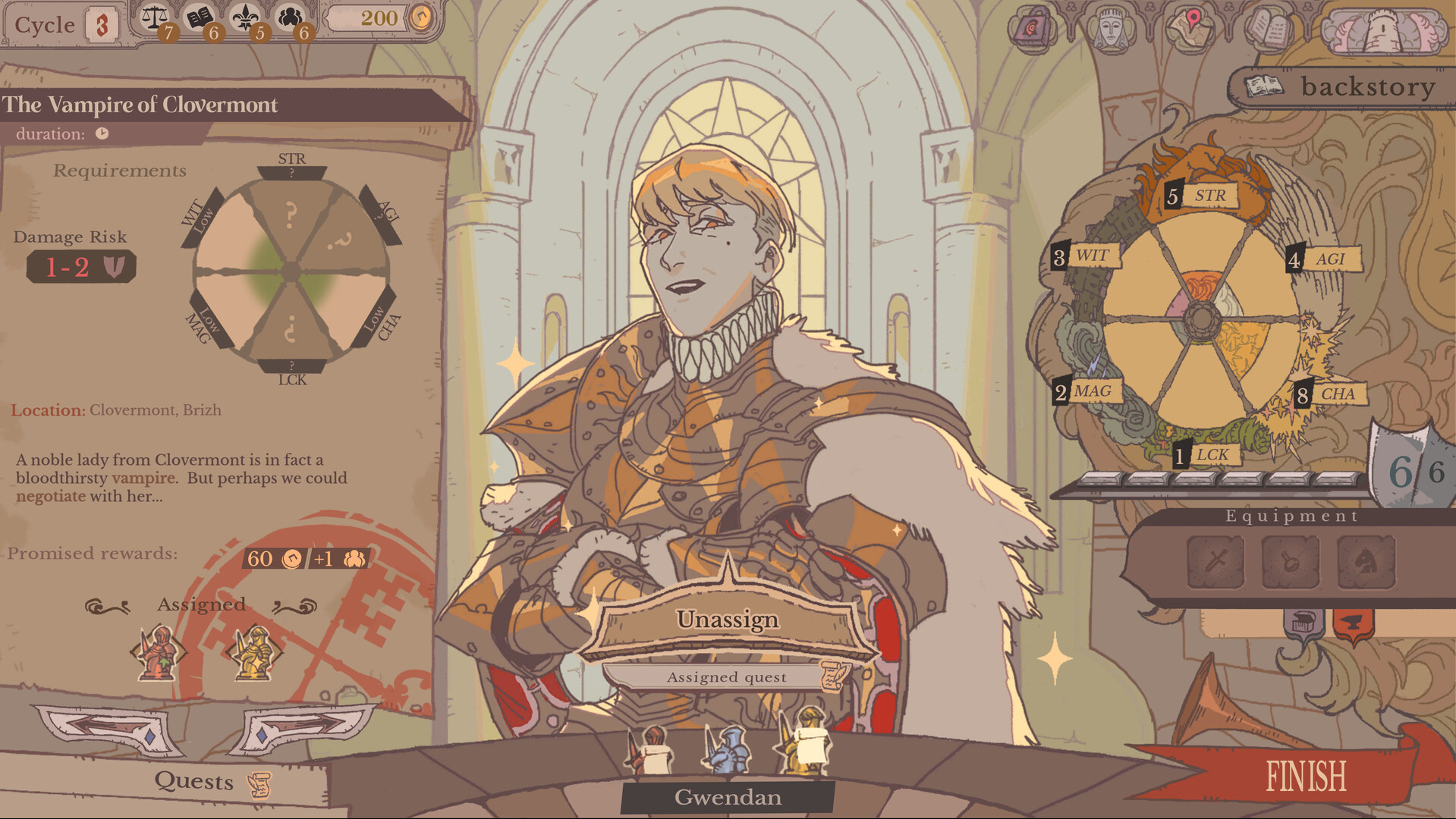
Strength, Agility, Charisma, Luck, Magic and Wit provide an understandable starting point, but they do not describe the whole person. Traits, satisfaction, relationships, food preferences and story history can all make two similarly rated Knights behave differently. Use the Knights directory to compare recruitment and character state, then check the quest directory before making a high-risk assignment.
Time rewind turns failure into information
The rewind system changes the usual meaning of a bad result. Losing a timeline can still teach you a character detail, expose a hidden condition or reveal why an apparently reasonable choice failed. Record what changed rather than repeating the same sequence immediately. Knowledge is a resource: it lets a later version of the Sovereign recognize situations that the first version could not understand.
A practical first-reign strategy
- Slow down at the audience. Identify the affected group and likely follow-up work before choosing an answer.
- Protect your roster. Avoid sending every useful Knight away at the same time, especially when the next audience or story event is unknown.
- Match context as well as attributes. A high number helps, but a character’s traits and connection to the situation may be more important.
- Check satisfaction regularly. A successful kingdom is difficult to maintain if the Round Table is frustrated, unavailable or at risk of leaving.
- Use meals and free time deliberately. Relationship actions are limited opportunities, so choose them with a purpose instead of treating them as decorative scenes.
- Keep a simple timeline note. Write down the cycle, the decision, the Knight assigned and the result. That small record makes a rewind dramatically more useful.